رسالة على الانترنت

المزيد من المعلومات
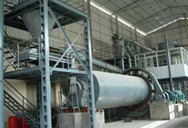
Crushing process of hematite: Hematite is generally present in the form of large blocks or particles, so it needs to be crushed to reduce particle size and facilitate subsequent grinding and extraction of useful minerals. The crushing process of hematite usually includes the following
Read More
2023.10.24 Hematite is a weakly magnetic mineral and can be processed using a variety of beneficiation processes, such as gravity separation, flotation, strong magnetic separation,
Read More
2021.9.15 Hematite is widely distributed and involves many types of minerals, so the method of beneficiation is not single. The main beneficiation methods include the gravity
Read More
Roasting magnetic separation is one of the effective methods to select fine to fine particles (less than 0.02mm) hematite. When the mineral composition is relatively complex and it is difficult to
Read More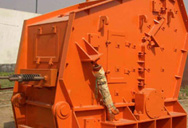
Hematite ore has a wide distribution and involves many minerals. The hematite separation processes mainly including the flotation process, magnetic separation process, gravity separation process and roasting magnetic separation process.
Read More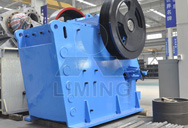
Primary Crushing: The ore is initially crushed to a size that can be handled more easily. Screening: The crushed ore is then screened to separate fine particles from larger chunks.
Read More
2022.8.3 Iron ore is gradually selected through the procedures of crushing, screening, grinding, classification, magnetic separation, flotation, gravity separation, roasting reduction, filtration ... If it still contains weak magnetic iron
Read More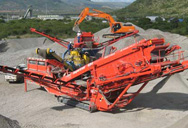
2021.3.24 Mineralogical studies have established that the main iron-bearing mineral is hematite, which contains 69.02 to 70.35% of iron distributed in the ore. Magnetite and hydrogoethite account for 16.71–17.74 and
Read More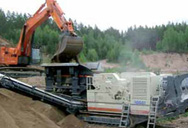
2021.5.5 The specific gravity of iron minerals is generally greater than that of the accompanying gangue, especially for coarse-grained hematite. After crushing and sieving, the hematite can reach the particle size after monomer
Read More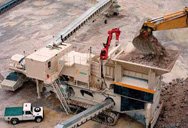
2021.4.30 The specific gravity of iron minerals is generally greater than that of the accompanying gangue, especially for coarse-grained hematite. After crushing and sieving, the hematite can reach the particle size after monomer
Read More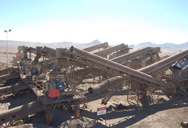
2016.4.19 Low grade deposits containing specular hematite (Fe2 O3) as the major iron mineral as low as 25% Fe can be treated with “Sub-A” Flotation to produce concentrates that average better than 62% Fe with less than 9%
Read More
The iron ore dressing process is divided into crushing and screening, grinding and classification, separation, and ... Hematite (Fe2O3), Limonite(Fe2O3.nH2O), and Siderite (FeCO3). According to the different properties of iron ... Mineral
Read More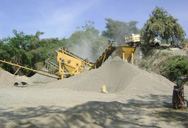
2025.4.2 It is one of nature’s most abundant and widely distributed iron-bearing minerals. Hematite has become an important raw material for steelmaking due to its high iron content. ... there are many interlayers, and the
Read More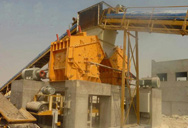
2025.2.22 Different types of iron ore (hematite, magnetite, limonite, and siderite) require specific processing methods due to their unique mineral compositions and properties. The five key steps in iron ore processing include:
Read More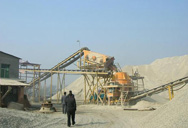
2013.6.14 Hematite-an iron ore mineral. The iron-rich mineral hematite is surrounded by silicate material, which is considered to be ... The goal of comminution is to crush the ore into small particles that contain only one
Read More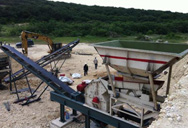
2023.11.1 This study magnetization roasts hematite ore after mechanical crushing and HVPD, ... (S and P) were 1.32% and 0.026%, respectively. As shown in Fig. 1, the main iron-bearing mineral was hematite (Fe 2 O 3), and the main gangue was quartz (SiO 2). Table 1. Chemical composition analysis of the raw ore. Component TFe FeO SiO 2 Al 2 O 3 ...
Read More
2015.12.26 In mineral processing or metallurgy, the first stage of comminution is crushing.. Depending of the type of rock (geometallurgy) to be crushed, there are 2 largely different techniques at your disposition for
Read More
Industrially valuable iron minerals are magnetite, hematite, limonite, ilmenite and siderite. Iron ore beneficiation mainly includes crushing, grinding, gravity separation, flotation and magnetic separation.. Combining the characteristics
Read More2024.6.12 Uses: Hematite is used in the extraction of iron for the manufacture of steel, which is the most popular application of the mineral.The vast quantity of hematite ore mined is then
Read More
Hematite is one of the most abundant iron ore minerals, characterized by its reddish-brown color and metallic luster. It is typically found in sedimentary and metamorphic rocks and is a primary source of iron for steel production. The mineral composition of hematite includes: Iron (Fe): 70% by weight in pure hematite, making it a rich source of ...
Read More
2016.1.17 In mineral processing, the reduction of minerals by crushing and grinding may be regarded as having one or other of two main objectives: the attainment of a size appropriate for the direct industrial application of the
Read More
2015.6.19 This Table of Ball Mill Bond Work Index of Minerals is a summary as tested on 'around the world sample'. You can find the SG of each mineral samples on the 911 Metallurgist is a trusted resource for practical
Read More
المزيد من المعلومات
حقوق حقوق التأليف والنشر: رقم التدوين Development Buide 10200540 -22. خط الخدمة: 0371-86549132. E-mail:[email protected] العنوان: الرقم البريدي رقم 169 Second Avenue Avenue New Avenue: Chengzhou الصين: إحصاءات الموقع الشبكي 450001.